Installing
A Ceiling Airer
What
is the best place to install a ceiling airer. For example, do
I need good ventilation or high ceilings?
Easy
to install in most ceiling spaces, our ceiling airers can be
installed in various locations, such as kitchens, utility rooms,
hallways or even stairwells. You do not need particularly high
ceilings to install a ceiling clothes airer as well-hung washing
will dry naturally in the warm air within the home. We do however
recommend installing the airer in a room which is well ventilated
with a sufficient heat source to allow the washing to dry naturally
whilst it is hung in the ceiling space.
How
much weight will a pulley airer take and will my ceiling support
this?
Our
drying racks are designed for drying laundry and each will take
a full load of washing. With this in mind, we do not recommend
overloading the airer and we keep our recommended weight limit
conservative at 14kg. If you are unsure if the ceiling will
take the weight, then we highly recommend speaking to a professional
trades person who would be able to advise you further. If the
pulleys are installed into good solid joist however, then this
is never normally an issue.
How
do the pulleys attach to the ceiling and how do I locate the
ceiling joists?
Our
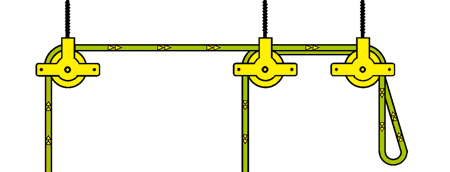
drying racks are supplied with screw pulleys which are cast
as a single unit and screw directly into the ceiling joists,
found under most plasterboard ceilings. To locate these either
use a stud finder or tap across the ceiling whilst listening
to the density of the sound. Most ceiling joists will run either
parallel with the wall or will meet it at a 90-degree angle
and are normally spaced 35cm apart. To locate hard to find joists,
use a small pin and tap into the plasterboard at 5cm intervals.
These holes will be unnoticeable and can be refilled afterwards.
Can
I install a pulley clothes airer if I do not have access to
the ceiling joists?
If
you have a suspended ceiling or are unable to locate the ceiling
joists, then the only sure way to install the pulleys is to
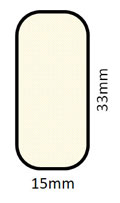
attach a baton to the ceiling and to screw the pulleys directly
into this. Some suppliers offer pulleys with longer screw threads
to reach through the cavity and into the joists however the
pulleys need to be installed into and abutted up to something
solid, so that when the airer is being raised and lowered, the
pulleys are not drawn together. Longer screw threads leave the
pulley unsupported and can cause damage to the plaster board
around the pulley. Adding a baton to the ceiling will keep these
in place, and this can either be painted and blended in or made
to be a feature.
Can
a ceiling clothes airer be installed on a sloping ceiling?
Yes
100% a ceiling airer can be installed on a sloping ceiling.
The only requirement is that there is a clear line of sight
between the pulleys so that the ropes can run freely and unobstructed.
You can either position these at an angle or so that they are
vertical. The rack can be kept level by adjusting the ropes
as required.
Can
a ceiling clothes airer be installed on a concrete ceiling?
Yes,
it is possible to install a ceiling airer on a concrete ceiling.
As with a suspended ceiling, the best option is to install a
baton and screw the pulleys into this. The baton can be firmly
attached to the ceiling or supported at either end and either
blended in or made into a feature.
How
much clearance height will I need for a door to open underneath?
The
clearance height for a ceiling clothes airer depends on the
height of the rack ends and pulleys combined. Depending on the
model (height of the rack end) this is set at between 20cm to
25cm tall. This is enough height for a door or cupboard to open
underneath.
Can
the cleat hook be positioned to one side or does this need to
be in line with the pulleys?
Yes,
the cleat hook can be positioned to one side. Because the airer
is static when not in use, this can be offset allowing for installation
in spaces where there is no adjacent wall for the cleat hook
to be installed. It is however highly recommended that when
the airer is being raised and lowered that the rope is not allowed
to rub on the side of the pulley block. This will cause the
rope to fray.
|